Complete Guide to Moroccan Markets: Currency, Numbers, and Bargaining
Shopping in Morocco is a unique experience that combines culture, tradition, and commerce. This comprehensive guide will help you understand the dual currency system, master essential numbers, and navigate market interactions with confidence.
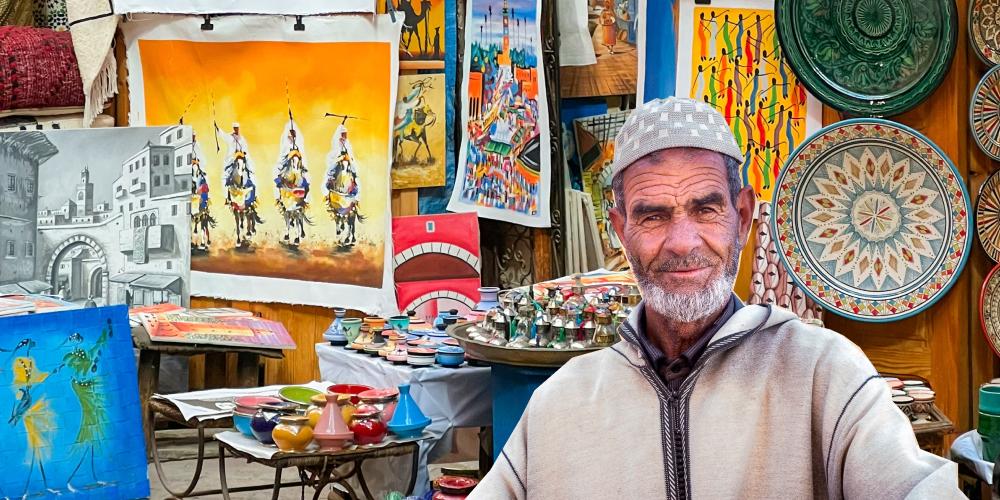
Shopping in Morocco is a unique experience that combines culture, tradition, and commerce. This comprehensive guide will help you understand the dual currency system, master essential numbers, and navigate market interactions with confidence.
Arabizi Pronunciation Key
Before diving in, note the special numbers used to represent specific sounds in Moroccan Darija:
3 = The Arabic letter ع (A deep 'A' sound from the throat, like 'Ali').
7 = The Arabic letter ح (A sharp 'H', like breathing on glasses to clean them).
9 = The Arabic letter q (A popping 'K' sound from the back of the throat).
h = The Arabic letter خ (Like the 'ch' in Scottish 'Loch').
Understanding Moroccan Currency: Dirham vs. Ryal
One of the most confusing aspects for visitors is the dual currency system.
The Official Moroccan Dirham (MAD) used in malls, supermarkets, and restaurants.
The Traditional Ryal Used in souks, by vegetable vendors, and in taxis.
But it is really simple knowing 1 Dirham is exactly 20 Ryal.
Quick Currency Conversion Examples
Here is how locals speak about prices. When in doubt, ask "Dirham wla Ryal?" (درهم ولا ريال؟) (Dirham or Ryal?).
1 MAD (dirham) (درهم)
Equivalent: 20 Ryal (3chrin ryal) (عشرين ريال)
2 MAD (jouj drahem) (جوج دراهم)
Equivalent: 40 Ryal (rb3in ryal) (ربعين ريال)
5 MAD (khamsa drahem) (خمسة دراهم)
Equivalent: 100 Ryal (myat ryal) (مية ريال)
10 MAD (3chra Drahem) (عشرة دراهم)
Equivalent: 200 Ryal (myatin ryal) (ميتين ريال)
50 MAD (Khamsin Dirham) (خمسين درهم)
Equivalent: 1000 Ryal (Alf ryal) (ألف ريال)
150 MAD (mya w khamsin Dirham) (مية وخمسين درهم)
100 MAD (Myat Dirham) (مية درهم)
Equivalent: (2alfayn Ryal) (ألفين ريال)
Essential Numbers in Darija
You need numbers to negotiate. Here is the breakdown with both scripts.
Basic Numbers (1-10)
1 Wa7ed (واحد)
2 Jouj (Jouj)
3 Tlata (تلاتة)
4 Rb3a (ربعة)
5 Khamsa (خمسة)
6 Setta (ستة)
7 Sb3a (سبعة)
8 Tmenya (تمنية)
9 Ts3ud (تسعود)
10 3chra (عشرة)
Teens (11-19)
The suffix "-tach" is usually added to the root number.
11 7dach (حضاش)
12 Tnach (طناش)
13 Tlttach (تلطاش)
14 Rb3tach (ربعطاش)
15 Khamstach (خمسطاش)
16 Settach (سطاش)
17 Sb3tach (سبعطاش)
18 Tmen-tach (تمنطاش)
19 Ts3-tach (تسعطاش)
Tens (20-90) & Hundreds
20 3chrin (عشرين)
30 Tlatin (تلاتين)
40 Rb3in (ربعين)
50 Khamsin (خمسين)
60 Settin (ستين)
70 Sb3in (سبعين)
80 Tmanin (تمانين)
90 Ts3in (تسعين)
100 Mya (ميا)
200 Myatayn (مياتاين)
How to Combine Numbers
In Darija, unlike English, we often say the units before the tens (like in German). We use the letter "w" (و) (meaning "and") to connect them.
Formula: [Unit] + w + [Ten]
Example A: 25
English: Twenty-five
Arabizi: Khamsa w 3chrin
Arabic writing: خمسة وعشرين
Example B: 42
English: Forty-two
Arabizi: Tnayn w rb3in
Arabic writing: تناين وربعين
Example C: 150
English: One hundred fifty
Arabizi: Mya w khamsin
Arabic writing : ميا وخمسين
Essential Market Vocabulary
Memorize these phrases to gain respect from sellers.
Hello / Peace
Salamo Alaykum (السلام عليكم)
A good starter for almost all conversations.
How much is this?
"Bch7al hada?" (بشحال هدا؟) is used for masculine items.
"Bch7al hadi?" (بشحال هدي؟) is used for feminine items.
Too expensive!
"Ghali bzzaf!" (غالي بزاف!), a standard reaction when the price is too high.
Lower the price a bit
"N9ess chwiya" (نقص شوية), a friendly bargaining attempt.
What's the last price?
"Akhir taman?" (آخر تمن؟) is used to finalize the deal, you are asking for the last price and don't want to keep bargaining anymore.
Okay / Deal
"Safi" (صافي) is a way to express agreement.
No, thank you
"Lla, chukran" (لا، شكراً) is used to try and walk away politely from the deal.
Goodbye
"Bslama" (بسلامة) is used when leaving the store, now you are showing that you are completely out of the deal but be sometimes ready to hear some big discounts as you walk away.
Common Market Scenarios
Here is how these words look in a real conversation.
Basic Purchase (Fruit Stand)
Context: Buying oranges. The price is usually fixed or slightly negotiable.
Buyer: Salamo Alikum (السلام عليكم ) (Hello)
Seller: Wa Alaykum Salam (وعليكم السلام) (Hello)
Buyer: Bch7al Limoun? (بشحال الليمون؟) (How much are the oranges "Limoun"?)
Seller: 100 Ryal (5 Dirhams) (مية ريال)
Buyer: Wakha, 3ber liya kilo (واخا، عبر ليا كيلو) (Okay, weigh me one kilo.)
Bargaining (Souk)
Context: Buying a traditional Jellaba. Bargaining is mandatory.
Buyer: Bch7al had Jellaba? (بشحال هاد الجلابة؟) How much is this Jellaba?
Seller: Rb3alaf Ryal. (ربعالاف ريال.) (4000 Ryal (200 Dirhams).)
Buyer: Ghali bzzaf! Na3tik fiha mya dirham. (غالي بزاف! نعطيك فيها ميا درهم.) (Too expensive! I will give you 100 Dirhams for it (2000 Ryal).)
Seller: Lla maymkench, zidi 50 dirham w allah yrebbe7. (No way, add 50 dirhams and it's a deal.) (لا ميمكنش زيدي خمسين درهم والله يربح)
Buyer: Mya w tlatin dirham, hada akhir taman. (ميا وتلاتين درهم، هذا آخر تمن.) (130 Dirhams "2600 Ryal", that is my last price.)
Seller: Safi, allah ysekher. (صافي الله يسخر.) (Okay, it's a deal.)
Cultural Tips for Market Shopping
Greetings Matter: Never ask "How much" immediately. Always say Salam Alaykum (السلام عليكم) first.
The Ryal Check: If a price seems impossibly high (e.g., 2000 for a sandwich), they are speaking Ryal (meaning 100 Dirhams), not Dirhams. Always clarify.
Example: "Wash Ryal wla Dirham?" (واش ريال ولا درهم؟)
The "Walk Away": If the price isn't dropping, politely say Chukran (شكراً) and walk away. Often, the seller might call you back with a better price.